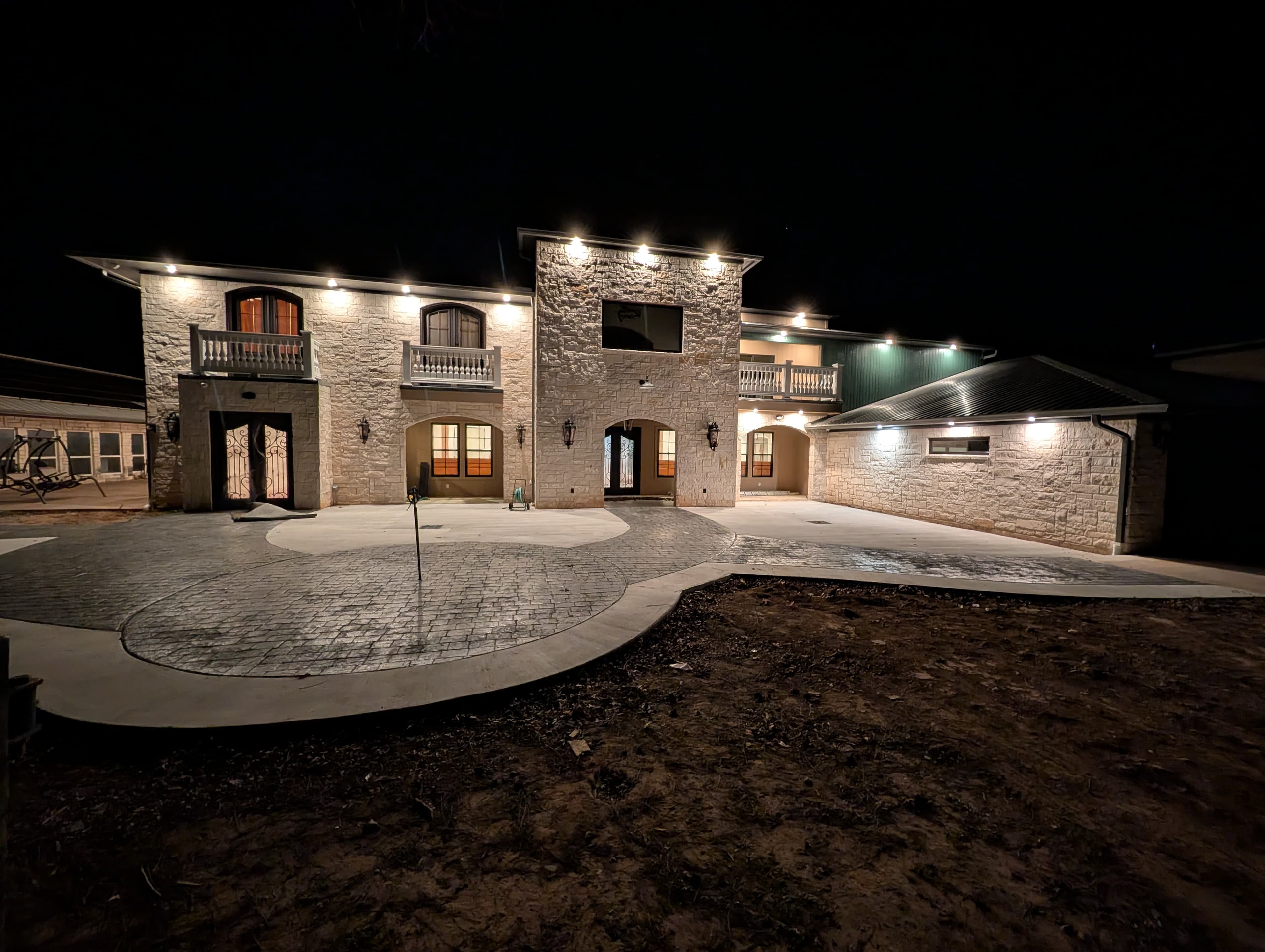
Murphy went from a rural crossroads of about 1,500 people in 1990 to a built-out suburb of roughly 21,000, and it did nearly all of that filling-in during a tight window — the early 2000s through the early 2010s. That timing decides what a whole-home renovation means here. Landlocked between Plano, Wylie, Parker, and Sachse with almost no vacant land left, Murphy is a city of master-planned two-story brick-and-stone homes that are now fifteen to twenty-plus years old: solid bones, dated layouts, and original systems all reaching middle age at once. So a gut renovation in Murphy is rarely about rescuing a ruin — there's little old stock to rescue. It's about taking a good newer house and resetting it to a current standard, done gut-to-finish under one accountable team instead of a rotating cast of trades.
The Murphy homes that get renovated
Because the city built out in one concentrated era, the renovation candidates are remarkably consistent. Neighborhoods like Maxwell Creek, The Aviary, Rolling Ridge Estates, Hunters Landing, and Windy Hill Farms went up as master-planned subdivisions of two-story brick-and-stone homes, and they share the same dated moves: a kitchen walled off from the family room, a formal living room nobody uses, a primary bath that felt current in 2005, and builder-grade finishes throughout. With essentially no pre-2000 housing in Murphy, you don't find the century-old cottages or 1970s ranches that some Collin County towns mix in — which makes the work here uniformly a reset of a newer home rather than a rescue. The upside is predictability: these houses were framed to similar standards, so opening one up tends to reveal a familiar set of conditions rather than a surprise.
What the Blackland clay adds before finishes
Every Murphy renovation starts underneath the slab. The city sits on the expansive Blackland Prairie clay that runs under most of Collin County — soil that swells when it's wet and shrinks back when it's dry, and that seasonal push is why so many established homes show doors that won't latch by late summer and tile cracks that keep coming back. There's little point spending on new cabinetry, wide-plank floors, and trim over a foundation that's still moving, so confirming elevations, grading, and drainage comes first, and the finish scope goes on top of a house that's actually holding still. Opening the walls is also the moment to catch systems at the end of their run — an HVAC unit, roof, and water heater from the original build are all reaching the end of their service life on the same fifteen-to-twenty-year clock — so they get replaced while the walls are open, not after the drywall is back up.
Opening up the floorplan without structural surprises
The single most-requested move here — take down the wall between the kitchen and the family room — is also where owner-run projects stall. On these two-story homes, an interior wall on the ground floor frequently carries the floor above and the roof loads above that, so removing one means engineering a beam and header sized by a structural engineer, not just swinging a sledgehammer. That crosses the line from cosmetic to structural, which means a building permit and the state-licensed trades — plumber, electrician, HVAC tech — filing their own permits underneath it whenever pipes, wiring, or ductwork move. Sequencing those inspections in the right order, across several trades working at once, is the quiet coordination that keeps a gut renovation from losing weeks.
The Murphy permit and registration path
Murphy runs its process through City of Murphy Development Services — Building Inspection, and the city has one requirement that catches contractors off guard: it will not issue a permit until every contractor on the job — general, mechanical, electrical, and plumbing — is registered with the city, with that registration handled through a Cognito Forms application. Fees and inspection scheduling then run through the Municipal Online Services portal. In practice that means the paperwork has to be lined up before demolition, not chased afterward, because an unregistered trade is a stopped job. On top of the city, most of Murphy's master-planned neighborhoods answer to an HOA architectural committee, and anything touching the exterior — new windows, an added opening, a changed roofline, exterior stone or paint — generally needs its approval too. Two yeses on two timelines, lined up before the work gets ahead of the permits.
One team that owns the whole house
A gut renovation is where the whole-picture case stops being a slogan. A cabinet installer sees cabinets; a flooring crew sees floors. Take a house down to the studs and the real questions are how the foundation, the framing, the mechanical runs, the envelope, and the finishes all land together — and who answers when they don't. Texas licenses the trades but not a statewide residential general contractor, so the real choice is who coordinates all of them and stands behind the result. That is the heart of design-build: one accountable team from demolition to final walk-through, with a single line of accountability and the state-licensed electricians, plumbers, and HVAC techs the work legally requires folded into one plan. The Remo Guys has been renovating homes across Murphy since 2019, insured and bonded, treating that single point of accountability as the whole point.
What we handle
- —Design & space planning
- —Structural changes & load-bearing walls
- —Full MEP — mechanical, electrical, plumbing
- —Kitchens, baths & millwork
- —Permits, inspections & code
- —Finishes from slab to styling
Worth reading first
Whole-Home Renovation in Murphy — FAQ
- Do I need a permit for whole-home renovation in Murphy, TX?
- Yes — whole-home renovation in Murphy is permitted work. It's filed through City of Murphy Development Services — Building Inspection using Municipal Online Services portal. Murphy won't issue a permit until every contractor — general, mechanical, electrical, and plumbing — is registered with the city; registration runs through a Cognito Forms application and fees and inspections through the Municipal Online Services portal. We pull the permit and carry the project through every inspection.
- What does whole-home renovation in Murphy include?
- A whole-home renovation project with us covers design & space planning; structural changes & load-bearing walls; full MEP — mechanical, electrical, plumbing; kitchens, baths & millwork; permits, inspections & code; finishes from slab to styling. Because we're design-build, one team owns design, engineering for North Texas's expansive clay soil, Murphy's permitting, and construction — so nothing falls between a separate designer, builder, and stack of subcontractors.
- How much does whole-home renovation cost in Murphy?
- It depends on the size of the project, the finishes, and any structural or foundation work, so we scope and price each Murphy project individually rather than quote a flat rate. To plan around typical DFW ranges, use our cost estimator or the free remodel cost & permit guide.
- Is The Remo Guys licensed and insured?
- Texas doesn't issue a statewide license for residential general contractors, so the real assurance is one accountable team that's insured and bonded — which The Remo Guys has been since 2019. The state-licensed electrical, plumbing, and HVAC trades on your project each pull and inspect their own permits under the build.
Planning a budget? See typical DFW ranges in our cost estimator or grab the free remodel cost & permit guide.
Keep exploring
All our remodeling & construction services in Murphy →