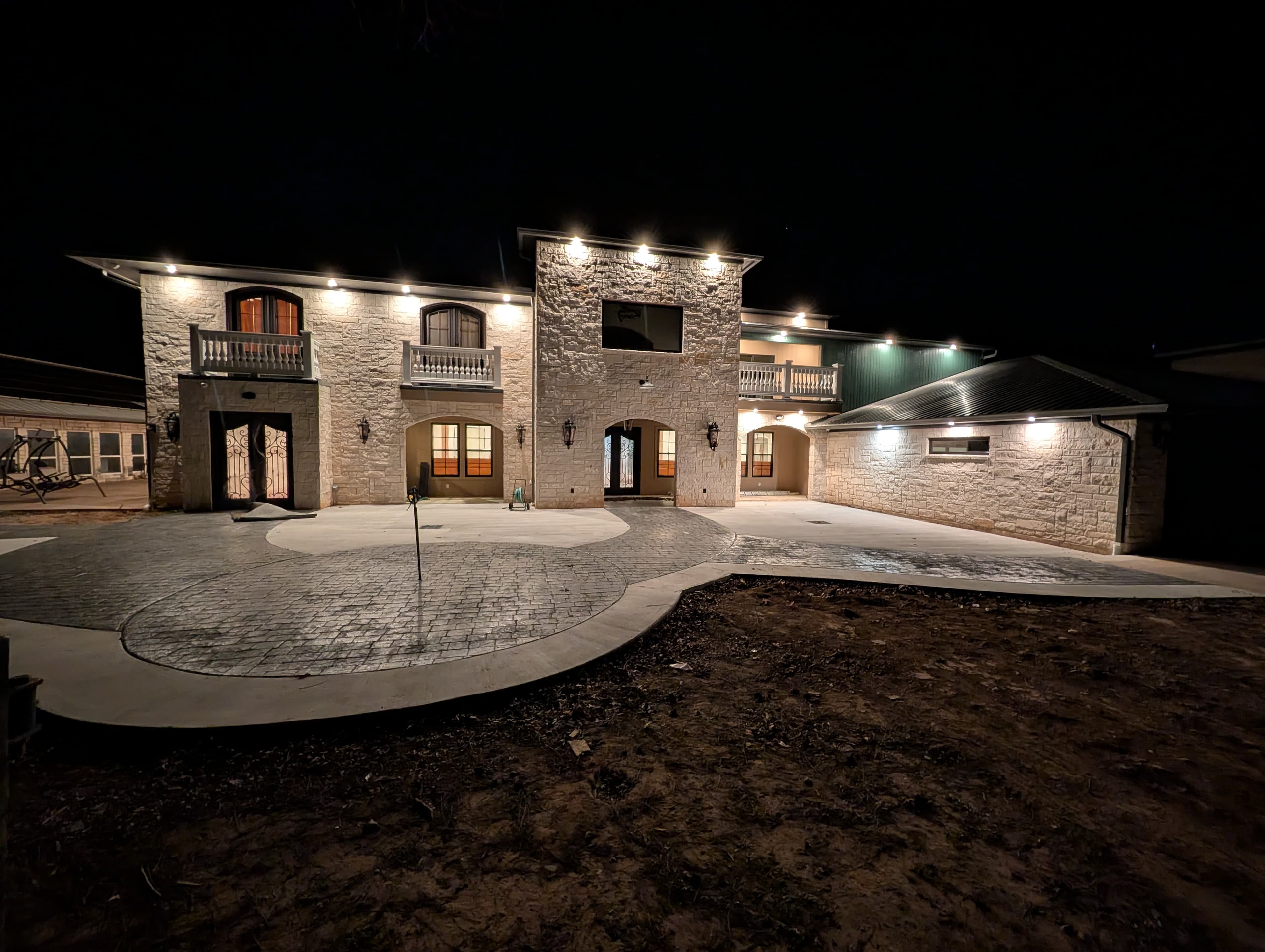
Plano is one of the most thoroughly built-out cities in Collin County, and that fact quietly defines what remodeling here actually means. The opportunity isn't empty land — it's the tens of thousands of homes built between the 1970s and the early 2000s that are now a full generation past their original finishes and systems. A whole-home renovation in Plano is less about adding space and more about unlocking a well-located house: pulling a compartmentalized floor plan open, replacing tired mechanicals, and bringing solid bones up to how people actually live now.
Why renovation, not new construction, dominates Plano
East Plano — much of it built in the 1970s and 1980s on the older side of US-75 — is full of homes with mature trees, deep lots, and dated interiors: closed-off kitchens, formal living-and-dining footprints, low ceilings, and finishes no one has touched in decades. West Plano's custom homes in neighborhoods like Willow Bend and Deerfield, built through the late 1990s and early 2000s, have reached the age where kitchens, primary suites, and HVAC systems are simply due. In both halves of the city, renovating a house in a proven school zone beats chasing one of the vanishingly few new-construction lots. That's why a gut-to-finish transformation is the most common large project we run in Plano — and why doing it as one coordinated job matters so much.
What a gut renovation in Plano really touches
Once the walls open, a cosmetic refresh becomes a systems project. Homes from Plano's earlier boom often hide undersized electrical panels, original cast-iron or early-plastic drain lines, single-pane windows, and insulation well below today's code. Reworking a floor plan means moving plumbing, power, and ductwork in concert — and because nearly every Plano home is slab-on-grade over expansive Blackland Prairie clay, any load-bearing change or slab re-leveling has to be coordinated with the foundation, not treated as a trim detail. One team sequencing demolition, structural work, the state-licensed electrical and plumbing trades, and finish carpentry is what keeps a gut renovation from fracturing into five disconnected jobs that each blame the next.
HOA review and Plano's historic districts
Most of West Plano's master-planned communities — Willow Bend West, Old Shepard Place, Hills of Prestonwood — run active HOAs with architectural review committees, and exterior work like new windows, roofing, brick, or a reworked front elevation usually needs written approval before a crew arrives. If your home sits in one of Plano's two heritage districts — Haggard Park or Downtown — or counts among the city's heritage landmarks, exterior changes run through the Heritage Commission's Certificate of Appropriateness. Those early-1900s homes reward a careful hand, and Plano's Heritage Tax Exemption can offset qualifying preservation work — but that approval has to lead the schedule, never trail it.
The permit path, handled
A whole-home renovation is filed through Plano's Building Inspections department on the city's eTRAKiT permit portal, on a valuation-based fee schedule, and Plano runs one of the faster reviews in the county. The real work isn't the paperwork — it's sequencing inspections so rough-ins pass before anything closes up. That coordination across every trade, under one warranty, is the whole point of hiring a general contractor for a project this deep: someone who sees your whole house instead of a single slice of it, and answers for how all of it comes back together.
What we handle
- —Design & space planning
- —Structural changes & load-bearing walls
- —Full MEP — mechanical, electrical, plumbing
- —Kitchens, baths & millwork
- —Permits, inspections & code
- —Finishes from slab to styling
Worth reading first
Whole-Home Renovation in Plano — FAQ
- Do I need a permit for whole-home renovation in Plano, TX?
- Yes — whole-home renovation in Plano is permitted work. It's filed through City of Plano Building Inspections using Plano's online permit portal. Plano runs one of the county's faster reviews — commonly on the order of 1 to 10 days depending on project type — on a valuation-based fee schedule. We pull the permit and carry the project through every inspection.
- What does whole-home renovation in Plano include?
- A whole-home renovation project with us covers design & space planning; structural changes & load-bearing walls; full MEP — mechanical, electrical, plumbing; kitchens, baths & millwork; permits, inspections & code; finishes from slab to styling. Because we're design-build, one team owns design, engineering for North Texas's expansive clay soil, Plano's permitting, and construction — so nothing falls between a separate designer, builder, and stack of subcontractors.
- How much does whole-home renovation cost in Plano?
- It depends on the size of the project, the finishes, and any structural or foundation work, so we scope and price each Plano project individually rather than quote a flat rate. To plan around typical DFW ranges, use our cost estimator or the free remodel cost & permit guide.
- Is The Remo Guys licensed and insured?
- Texas doesn't issue a statewide license for residential general contractors, so the real assurance is one accountable team that's insured and bonded — which The Remo Guys has been since 2019. The state-licensed electrical, plumbing, and HVAC trades on your project each pull and inspect their own permits under the build.
Planning a budget? See typical DFW ranges in our cost estimator or grab the free remodel cost & permit guide.
Keep exploring
All our remodeling & construction services in Plano →