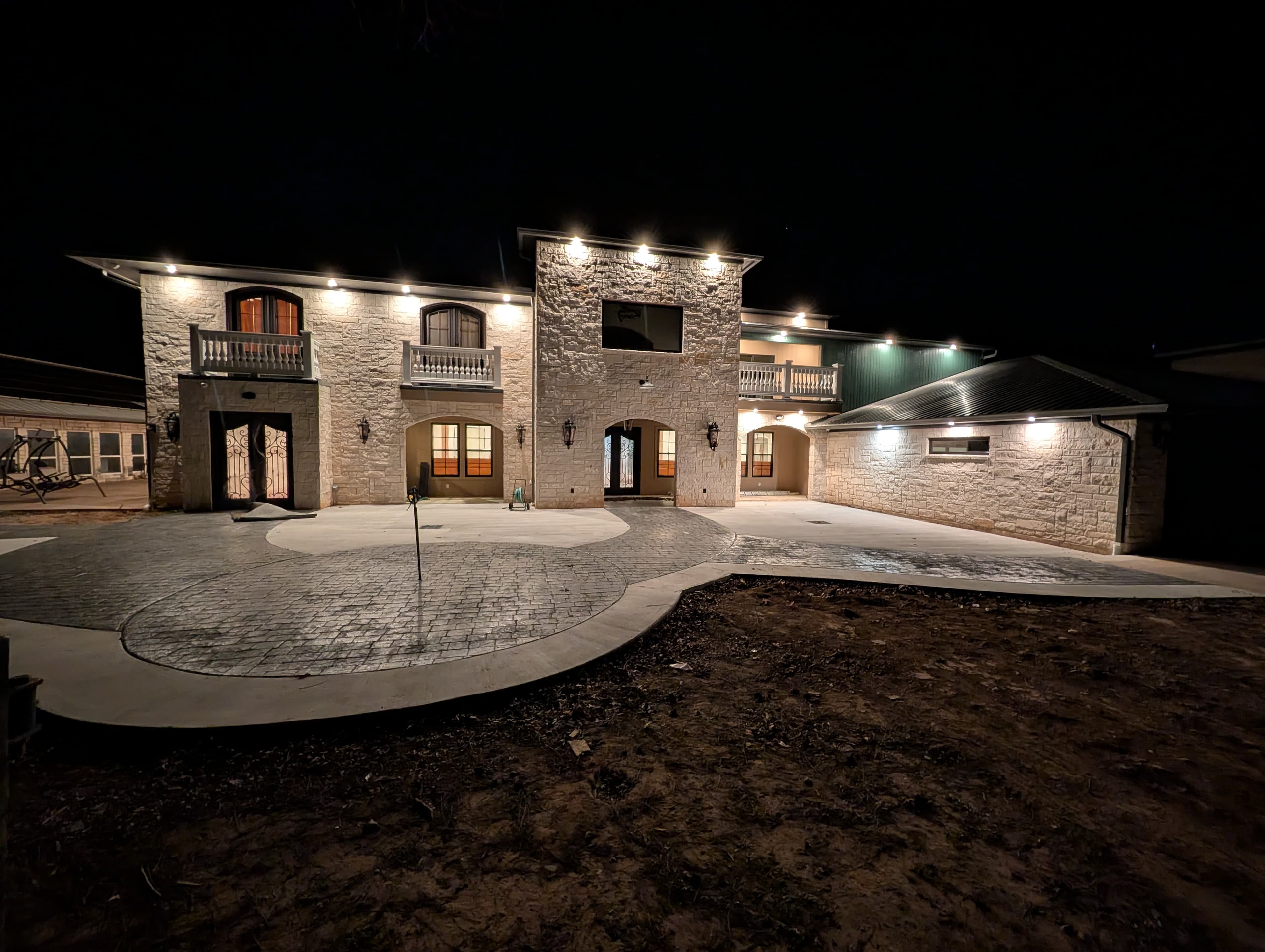
A whole-home renovation is the deepest project most homeowners ever take on: walls come down, systems come out, and the house you get back is effectively new behind its original brick. Done right, it isn't a stack of separate jobs bolted together — it's one continuous project run by a single accountable team, from the framing decisions to the final coat of paint.
What a gut-to-finish renovation actually involves
A true whole-home renovation pulls together more disciplines than its name suggests. It starts with design and space planning — deciding which walls hold the house up and which are just in the way, then reworking the floor plan around how you actually live. From there it moves through structural changes, a full mechanical, electrical, and plumbing (MEP) overhaul, new kitchens and baths, and the finishes everyone photographs: flooring, cabinetry, tile, and paint.
Every phase has to happen in the right order and pass its own inspections: demolition, structure, rough-in MEP, the inspections that let you close the walls, then insulation, drywall, and finish-out. Miss the sequence and you're tearing out finished work to reach a pipe you should have moved eight weeks earlier. That choreography — not any single trade — is the job.
The whole-picture advantage
This is where the case for a general contractor stops being abstract. A specialty contractor masters one slice. A pool builder isn't paid to think about how the new deck drains back toward your slab, and a cabinet shop isn't paid to notice that the wall you want opened is carrying a roof load. On a gut renovation, the failures rarely happen inside a trade — they happen in the handoffs between trades that no one owns.
A design-build general contractor exists to own those handoffs. One team draws the plan, pulls the permits, sequences the subs, catches the conflicts before they're framed in, and stands behind the result with a single warranty. When the electrician's rough-in collides with the structural beam, that's our problem to solve, not yours to referee.
Why Collin County raises the stakes
Two local realities make coordination matter more here than in most markets. The first is underfoot: almost all of Allen, Plano, Frisco, McKinney, and Prosper sits on Blackland Prairie clay — the expansive Houston Black soil that swells when wet and shrinks in drought. A gut renovation is the moment that movement becomes visible: peeling a house back to studs exposes the hairline cracks, out-of-level floors, and stressed framing the finishes were hiding. Any project that also changes drainage — an addition, a regrade, a patio — has to be coordinated with the foundation, not left to whichever trade dug last.
The second is the housing stock, which varies sharply across the county. West Plano and Allen's Watters Crossing are full of 1990s homes with closed-off floor plans and builder-grade systems at the end of their service life. Frisco's Starwood and Stonebriar and Prosper's Windsong Ranch skew newer and larger, where the work is scale and site rather than age. McKinney spans both worlds — early-1900s homes downtown and master-planned Stonebridge Ranch across town. The right renovation for a 1990s Plano ranch is a different project than one for a Prosper estate.
Five cities, five permit paths
There is no single Collin County permit desk — building permits are pulled city by city, and the path genuinely differs. Allen runs submittals through its Citizen Self-Service portal; Frisco adds a plan review that typically takes a couple of weeks with no expedited option. In most Frisco and Allen subdivisions an HOA architectural review runs in parallel — a separate approval on its own clock that can order changes even after the city signs off. McKinney adds a real wrinkle: a home inside the downtown Historic Overlay District needs a Certificate of Appropriateness before the city will issue a permit — governing windows, materials, and massing visible from the street. Prosper's larger lots bring their own considerations, from drainage across big parcels to septic on the outlying acreage. Knowing which desk you're standing at — and what it wants — is part of the job we handle.
Who it's for
A whole-home renovation is for the owner who loves their street, their schools, and their lot but not their floor plan, and would rather transform the house they have than move. It's for buyers of a dated-but-well-located home who want it reworked before they move in, and for owners whose 1990s systems and layout have aged out. If your project touches structure, MEP, and finishes at once — and especially if it changes how water moves across Collin County clay — it has outgrown a handyman's punch list. It's a coordinated build, and it wants one accountable team from slab to styling.
What we handle
- —Design & space planning
- —Structural changes & load-bearing walls
- —Full MEP — mechanical, electrical, plumbing
- —Kitchens, baths & millwork
- —Permits, inspections & code
- —Finishes from slab to styling
Whole-Home Renovation by city
Worth reading first
Whole-Home Renovation — FAQ
- What does whole-home renovation involve?
- A whole-home renovation project with us covers design & space planning; structural changes & load-bearing walls; full MEP — mechanical, electrical, plumbing; kitchens, baths & millwork; permits, inspections & code; finishes from slab to styling. As a design-build team we own design, engineering for North Texas's expansive clay soil, permitting, and construction under one contract — so the plan that's approved is the plan that gets built.
- Do I need a permit for whole-home renovation in the DFW area?
- Yes — whole-home renovation is permitted work across the DFW metroplex. The exact authority, portal, and rules vary by city, so each of our city pages lists the specific permitting details; whichever city you're in, we pull the permit and carry the project through every inspection.
- How much does whole-home renovation cost?
- It depends on the size of the project, the finishes, and any structural or foundation work, so we scope and price each project individually rather than quote a flat rate. To plan around typical DFW ranges, use our cost estimator or the free remodel cost & permit guide.
- Is The Remo Guys licensed and insured?
- Texas doesn't issue a statewide license for residential general contractors, so the real assurance is one accountable team that's insured and bonded — which The Remo Guys has been since 2019. The state-licensed electrical, plumbing, and HVAC trades on your project each pull and inspect their own permits under the build.
Related services
One team for the whole house — here’s what else we build across Collin County.