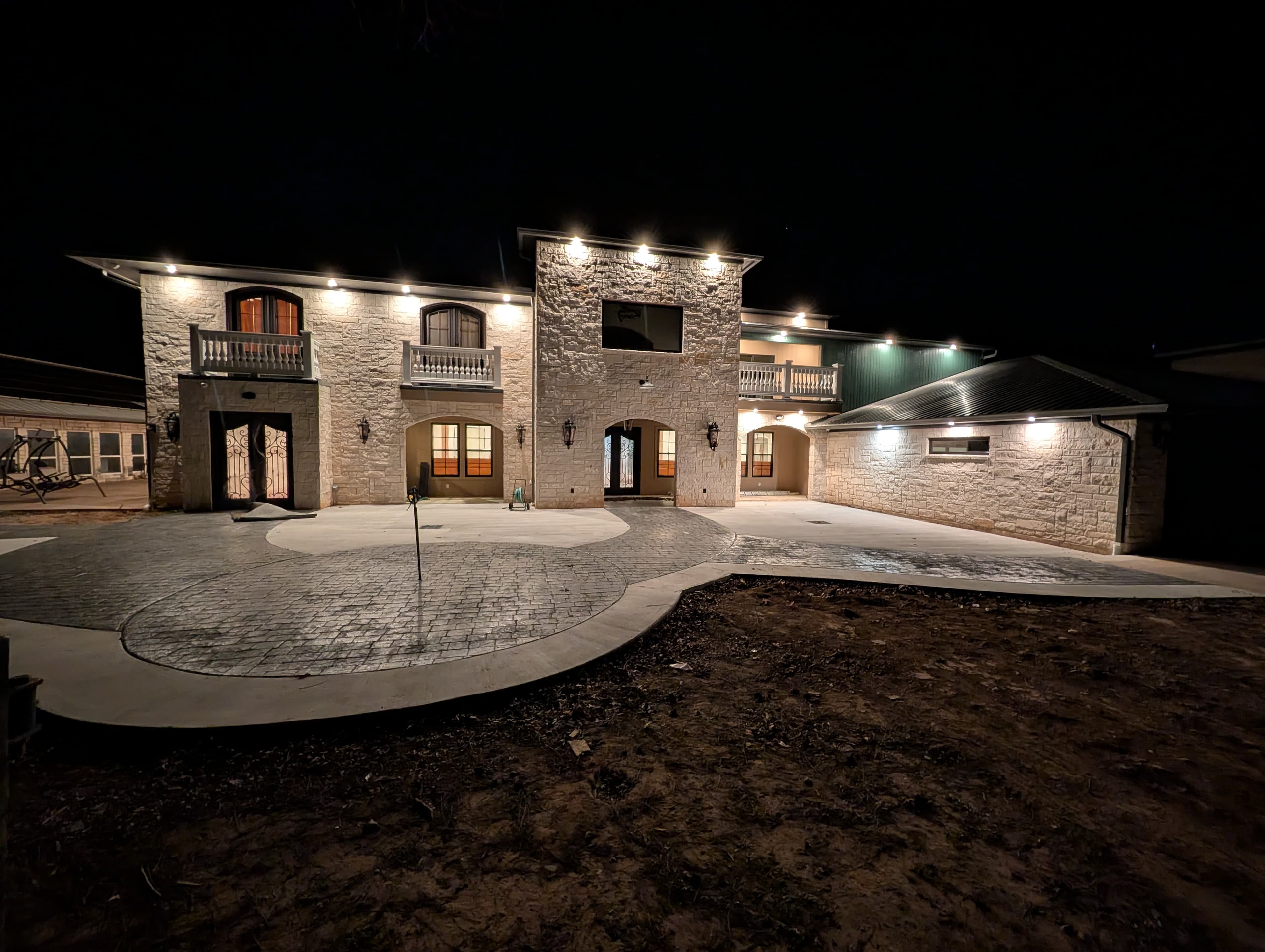
Anna is one of the fastest-growing cities in the country — ranked the No. 4 fastest-growing US city among those over 20,000 — and the housing tells that story at a glance: block after block of new 2000s-to-2020s master-planned homes, a population past 38,000 in 2026 and projected toward 100,000 by 2050. That shapes what a whole-home renovation even means here. Unlike an older suburb, Anna doesn't carry a deep stock of thirty-year-old houses waiting to be gutted, so a true studs-out transformation is genuinely rarer. In practice the whole-home work in Anna splits into two honest jobs — comprehensively reconfiguring a newer builder-grade home, and real gut renovations in the small older core near downtown — both run by one accountable team.
In Anna, "whole-home" means two different jobs
Anna's new stock dominates. The master-planned communities — Villages of Hurricane Creek, AnaCapri, Sherley Farms, Anna Ranch, and Avery Pointe — are where most owners live, and those homes are structurally young. Their "renovation" is rarely a gut; it's reworking a builder-grade floorplan and swapping the developer's baseline finishes for something that actually fits the family. The genuine gut candidates cluster in the small older core near the original downtown along US-75, where the pre-boom houses are finally old enough for a full systems-and-layout overhaul. Matching the scope to which Anna you're in is the first honest conversation we have.
Reconfiguring a builder-grade home for how you live
Most Anna homes were already built open-plan, so the reconfiguration is subtler than knocking down every wall. It's converting the formal dining nobody uses into an office or a bedroom, finishing out flex space, reworking a compartmentalized primary bath, expanding a cramped laundry, and replacing builder-grade cabinets, counters, floors, and trim throughout so the house reads custom instead of catalog. Where opening a wall is on the list, it still matters that some interior walls carry roof and ceiling loads — dropping one means an engineered beam and a permit, not a weekend with a sledgehammer. Move a kitchen sink or add a bath, and the new plumbing, gas, or electrical runs pull the state-licensed trades and their own permits in with them.
The older core: where a real gut makes sense
The pre-boom homes near downtown Anna are the ones that reward a studs-out approach. On a house that age, opening the walls tends to surface the same short list at once — supply lines, wiring, HVAC, and a roof all near the end of a first service life — and finding them together on day one is the difference between a clean budget and a mid-project surprise. A gut is also the one moment the slab and framing are exposed enough to measure, shim, and correct before a single new cabinet or tile goes on top of them.
Everything here sits on Blackland clay
Old core or new build, every Anna home rests on Blackland Prairie clay — the expansive soil that swells when it's wet and shrinks hard in a Texas drought. On any house that's ridden that movement for years, the sticking doors, hairline brick cracks, and slightly out-of-level floors owners learn to live with are worth reading honestly before finishes go in. A whole-home project is the natural time to confirm the slab, the grading, and the drainage are working together, because setting expensive new finishes on a foundation that's still moving is how you pay for the same work twice.
Register first, then permit
Anna runs its permitting a little differently than its neighbors, and it catches crews who don't know the town. The City of Anna Building Department requires contractors to register before pulling any permit — a separate registration track for the MEP trades than for everyone else — all through the city's SmartGov public portal. Homes out in Anna's extraterritorial jurisdiction permit through Collin County instead of the city, so step one is confirming which authority your address answers to. And where a master-planned neighborhood runs an HOA, exterior changes need architectural-review approval on a separate clock from the permit. Lining those tracks up before demolition is the quiet work that keeps a renovation from losing weeks.
Why one team beats a relay race
Texas licenses the electrician, the plumber, and the HVAC tech, but issues no statewide license for a residential general contractor — so the real question on a whole-home project is who coordinates all of them and answers for the result. That is the case for design-build: one team owns the plan from demolition to final walk-through and stands behind it with a single line of accountability, pulling the state-licensed trades in under one roof. The Remo Guys has been renovating homes across Collin County since 2019, insured and bonded, treating that single point of accountability as the whole point.
What we handle
- —Design & space planning
- —Structural changes & load-bearing walls
- —Full MEP — mechanical, electrical, plumbing
- —Kitchens, baths & millwork
- —Permits, inspections & code
- —Finishes from slab to styling
Worth reading first
Whole-Home Renovation in Anna — FAQ
- Do I need a permit for whole-home renovation in Anna, TX?
- Yes — whole-home renovation in Anna is permitted work. It's filed through City of Anna Building Department using City of Anna Public Portal (SmartGov). Anna requires contractor registration before permits — two separate applications, one for MEP trades and one for all other contractors — through its SmartGov public portal; properties in the ETJ outside the city permit through Collin County instead. We pull the permit and carry the project through every inspection.
- What does whole-home renovation in Anna include?
- A whole-home renovation project with us covers design & space planning; structural changes & load-bearing walls; full MEP — mechanical, electrical, plumbing; kitchens, baths & millwork; permits, inspections & code; finishes from slab to styling. Because we're design-build, one team owns design, engineering for North Texas's expansive clay soil, Anna's permitting, and construction — so nothing falls between a separate designer, builder, and stack of subcontractors.
- How much does whole-home renovation cost in Anna?
- It depends on the size of the project, the finishes, and any structural or foundation work, so we scope and price each Anna project individually rather than quote a flat rate. To plan around typical DFW ranges, use our cost estimator or the free remodel cost & permit guide.
- Is The Remo Guys licensed and insured?
- Texas doesn't issue a statewide license for residential general contractors, so the real assurance is one accountable team that's insured and bonded — which The Remo Guys has been since 2019. The state-licensed electrical, plumbing, and HVAC trades on your project each pull and inspect their own permits under the build.
Planning a budget? See typical DFW ranges in our cost estimator or grab the free remodel cost & permit guide.
Keep exploring
All our remodeling & construction services in Anna →