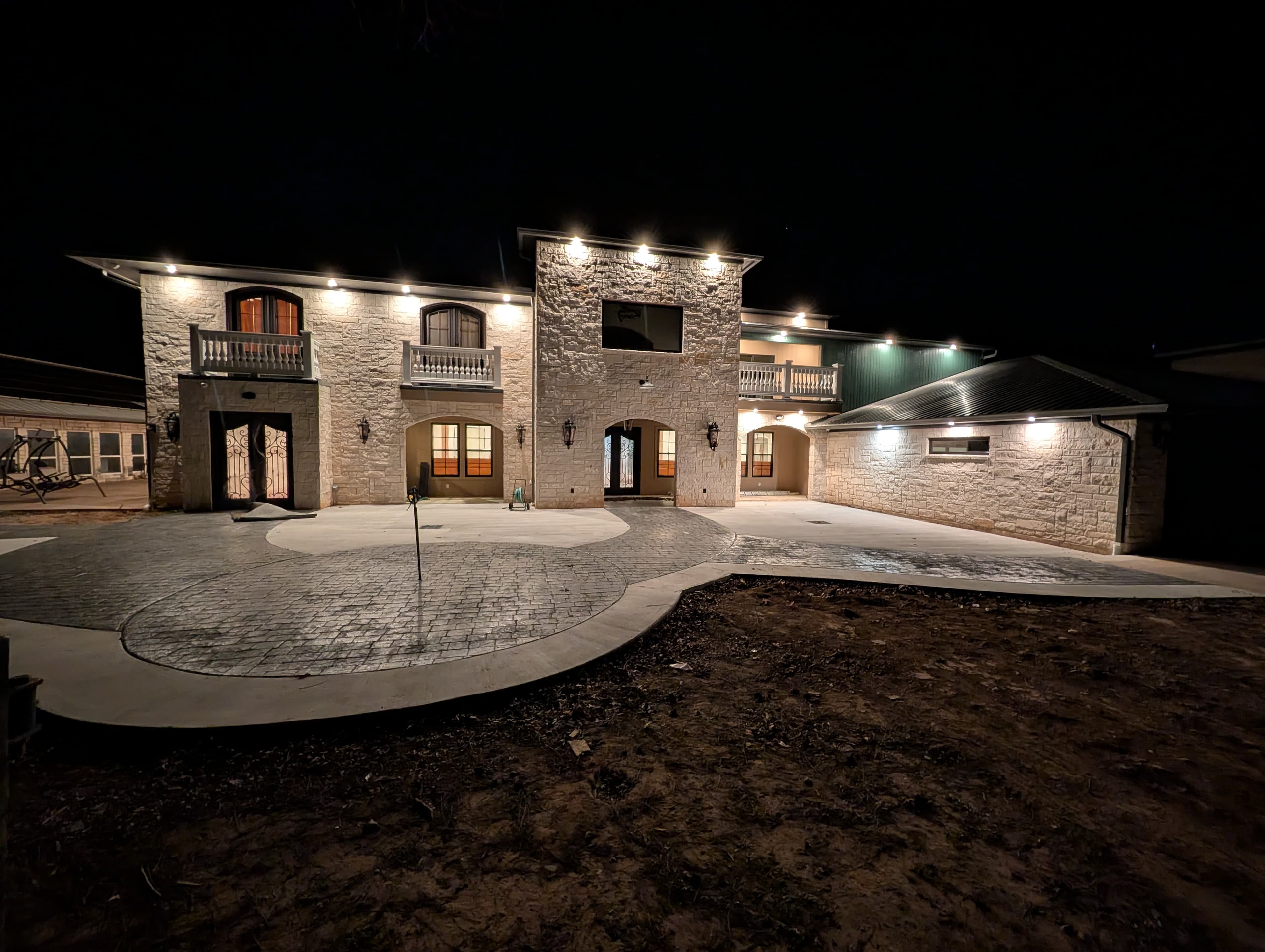
Melissa is one of the youngest cities in the country by the age of its houses. It doubled from about 14,000 people in 2020 to more than 32,000 by 2026, and nearly all of that growth arrived as 2010s and 2020s master-planned single-family homes pushing north along US-75 and the BNSF line. That reality changes what a "whole-home renovation" honestly means here: there is no deep stock of aging houses waiting to be gutted the way there is in older Collin County towns. Most whole-home work in Melissa is either reconfiguring a newer builder home that no longer fits, or a genuine gut of one of the older houses in the small railroad-era core near the original town center. Either way, we run it as one accountable team from demolition to final finish.
A young city means a full gut is the exception
It's worth being straight about this, because a lot of remodeling marketing isn't. In a town where the median house was framed in the last ten or fifteen years, the classic gut-to-finish — stripping a house to studs and slab and rebuilding every system — is the rare job, not the common one. The homes in Liberty, North Creek, Wolf Creek Farms, Bryant Farms, and The Quarry at Stoneridge are structurally young; their plumbing, wiring, and HVAC are near the start of their service lives, not the end. What those homes usually need isn't a gut. It's a smarter layout, a real primary suite, a kitchen that opens to where the family actually lives, and finishes that rise above builder-grade. We'd rather tell you that than sell you a demolition you don't need.
Where a whole-home renovation actually fits in Melissa
Two situations make the full treatment worthwhile here. The first is the small railroad-era core near the original town center, where the oldest houses in Melissa predate the master-planned boom by decades — those are the genuine down-to-the-studs candidates, with original systems, settled foundations, and floorplans from another era. The second is the newer home a family has outgrown from the inside: a whole-home reconfiguration that touches structure, mechanicals, and finishes at once — moving walls, relocating a laundry or a kitchen, upgrading systems — even though the shell is only a decade old. Both are real renovations. They just start from very different places, and pretending they're the same job is how budgets go wrong.
Opening up a builder floorplan without guesswork
The single most-requested change in Melissa's newer homes is the same one owners ask for everywhere: take down the wall between the kitchen and the living space. On these slab-on-grade builder homes, that interior wall is often carrying a roof or ceiling load, so removing it means an engineered beam and header — not a sledgehammer and hope. That's the line between cosmetic and structural, and crossing it means a permit through the City of Melissa's Development & Neighborhood Services, with the state-licensed trades filing underneath it. Relocating plumbing, gas, or electrical to suit a new layout pulls in trade permits and licensed plumbers, electricians, and HVAC techs of their own. Sequencing those moves and their inspections in the right order is the quiet work that keeps a reconfiguration from stalling.
Clay sets the terms, even under a young foundation
Every home in Melissa sits on the same Blackland Prairie clay as the rest of Collin County — the expansive soil that swells when it's wet and shrinks hard in a Texas drought. A newer slab has had less time to move, but it's moving, and drainage and grading are what decide whether it keeps sitting level. A whole-home project is the right moment to confirm the slab, the grading, and the site drainage are actually working together before new finishes go on top of them. On the older houses in the town core, that check matters even more, because those foundations have been riding the clay for decades. Getting the ground right first is the difference between finishes that last and finishes that crack.
Permits, annual registration, and Bureau Veritas
Before any permit is pulled in Melissa, a contractor has to be registered with the city — annual contractor registration is a real prerequisite here, not a formality, and it's one reason coordinating your own trades gets complicated fast. Permits themselves route through Development & Neighborhood Services, and inspections are handled by Bureau Veritas under contract to the city: requested by 5 p.m., they're scheduled for the next business day. That cadence is predictable, but only if the trades are sequenced so the right inspection is ready on the right day. We carry the registration, pull the permits, and line up the inspections so the job keeps moving.
Why one team owns the whole house
Texas licenses the trades — electrician, plumber, HVAC — but it issues no statewide license for a residential general contractor, so the real question on a whole-home project is who coordinates all of them and answers for the result. That's the case for design-build: one team owns the plan from demolition to final walk-through and stands behind it with a single warranty. A specialty contractor sees their slice of your house; a general contractor sees the whole house — foundation, systems, layout, and finish — and how each piece has to fit the next. The Remo Guys has been renovating homes across Collin County since 2019, insured and bonded, with that single line of accountability as the whole point.
What we handle
- —Design & space planning
- —Structural changes & load-bearing walls
- —Full MEP — mechanical, electrical, plumbing
- —Kitchens, baths & millwork
- —Permits, inspections & code
- —Finishes from slab to styling
Worth reading first
Whole-Home Renovation in Melissa — FAQ
- Do I need a permit for whole-home renovation in Melissa, TX?
- Yes — whole-home renovation in Melissa is permitted work. It's filed through City of Melissa Development & Neighborhood Services using Camino permitting portal. Contractors must register with Melissa each calendar year before any permit is issued, and inspections are run by a third-party firm (Bureau Veritas) — requested by 5 p.m., performed the next business day. We pull the permit and carry the project through every inspection.
- What does whole-home renovation in Melissa include?
- A whole-home renovation project with us covers design & space planning; structural changes & load-bearing walls; full MEP — mechanical, electrical, plumbing; kitchens, baths & millwork; permits, inspections & code; finishes from slab to styling. Because we're design-build, one team owns design, engineering for North Texas's expansive clay soil, Melissa's permitting, and construction — so nothing falls between a separate designer, builder, and stack of subcontractors.
- How much does whole-home renovation cost in Melissa?
- It depends on the size of the project, the finishes, and any structural or foundation work, so we scope and price each Melissa project individually rather than quote a flat rate. To plan around typical DFW ranges, use our cost estimator or the free remodel cost & permit guide.
- Is The Remo Guys licensed and insured?
- Texas doesn't issue a statewide license for residential general contractors, so the real assurance is one accountable team that's insured and bonded — which The Remo Guys has been since 2019. The state-licensed electrical, plumbing, and HVAC trades on your project each pull and inspect their own permits under the build.
Planning a budget? See typical DFW ranges in our cost estimator or grab the free remodel cost & permit guide.
Keep exploring
All our remodeling & construction services in Melissa →