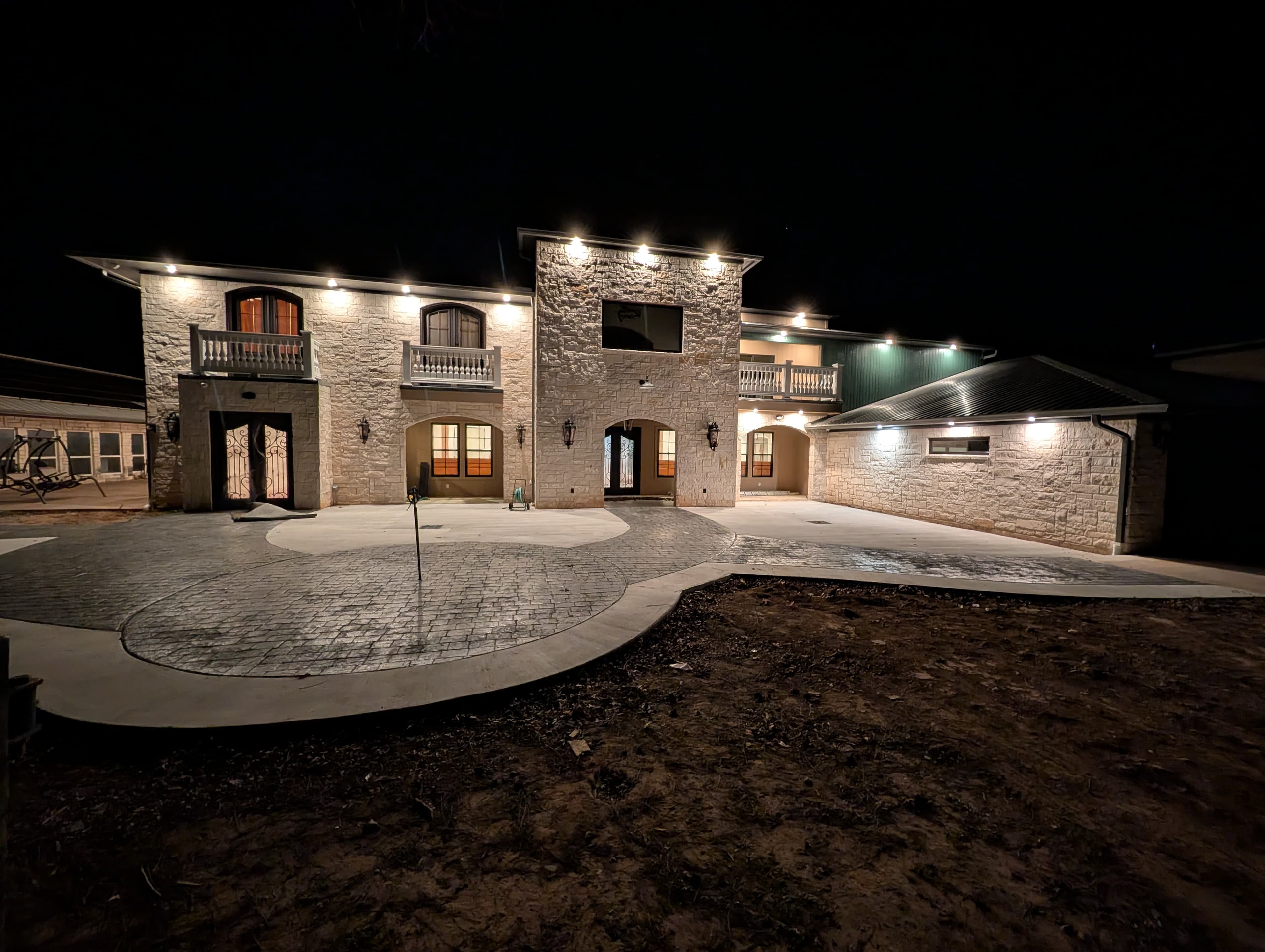
Prosper looks brand-new from the road, but the town's first wave of custom estates along the Preston Road corridor and its earliest master-planned sections are now old enough for a real overhaul — original kitchens, dated primary baths, and mechanical systems reaching the end of their first life. A gut-to-finish renovation here is less about chasing a trend and more about resetting a fifteen-to-twenty-year-old house sitting on Blackland Prairie clay so it holds for the next twenty. We run the entire job with one accountable team instead of a loose stack of subcontractors.
Prosper's housing stock is finally old enough to renovate
Most of Prosper filled in between roughly 2005 and 2020, which means a large share of the town is only now crossing into renovation age. Whispering Farms was built out between 2004 and 2013 on one-acre lots; the established custom pockets in Gentle Creek Estates and Christie Farms carry more architectural variety and mature trees than the newer tracts; and the earliest phases of Light Farms and Windsong Ranch are already more than a decade old. Those houses were generally well built, but 2000s-era plans — a formal living and dining room nobody uses, a kitchen walled off from the family room, a compartmentalized primary bath — date faster than the structure does. A whole-home renovation is how owners who love their lot, their street, and Prosper ISD get the layout they'd buy new, without leaving.
In Prosper, a gut job starts at the slab
Prosper sits on Blackland Prairie clay — the expansive Houston Black soil that swells when it's wet and shrinks hard in a Texas drought. On a home that's been riding that movement for ten or fifteen years, the sticking doors, hairline brick cracks, and slightly out-of-level floors owners learn to ignore become impossible to ignore the moment the finishes come off. That's actually the opportunity: a gut renovation is the one time the slab and framing are exposed enough to measure, shim, and correct before a single new cabinet or tile goes in. Skip that step and you're setting expensive finishes on a foundation that's still moving underneath them.
One plan, one team — the whole-picture approach
This is where hiring a general contractor instead of managing trades yourself earns its keep. A cabinet shop isn't paid to notice the wall you want opened is carrying a roof load, and a flooring crew won't flag that new floors will never sit flat until the slab is addressed. The failures on a gut job almost never happen inside a trade — they happen in the handoffs between them. A design-build team owns those handoffs end to end: one crew draws the plan, sequences demolition through finish-out, and stands behind the result. Texas issues no statewide license for general contractors, so what actually protects you is a builder who is insured, bonded, and has been building in this market since 2019 — pulling the state-licensed electricians and plumbers in under one roof.
Permits and HOA review in Prosper
Interior remodels move through the Town of Prosper's online Citizens Self-Service portal, and residential alterations are permitted at roughly seventy-five cents per square foot plus a base fee — modest, but the inspections are real and sequenced. The bigger variable is the HOA: Windsong Ranch, Light Farms, Star Trail, and Gentle Creek all run architectural review committees that must sign off before any exterior change — new windows, a re-skin, a roofline tweak — and they answer on their own clock, separate from the town. Pulling the building permits and clearing that review in parallel is part of what we take off your plate.
What we handle
- —Design & space planning
- —Structural changes & load-bearing walls
- —Full MEP — mechanical, electrical, plumbing
- —Kitchens, baths & millwork
- —Permits, inspections & code
- —Finishes from slab to styling
Worth reading first
Whole-Home Renovation in Prosper — FAQ
- Do I need a permit for whole-home renovation in Prosper, TX?
- Yes — whole-home renovation in Prosper is permitted work. It's filed through Town of Prosper Building Inspections using Prosper's online permit portal. Prosper charges a $300 nonrefundable application fee on new homes and about $1.00 per square foot for building permits ($100 minimum); additions over 400 sq ft need engineered plans. We pull the permit and carry the project through every inspection.
- What does whole-home renovation in Prosper include?
- A whole-home renovation project with us covers design & space planning; structural changes & load-bearing walls; full MEP — mechanical, electrical, plumbing; kitchens, baths & millwork; permits, inspections & code; finishes from slab to styling. Because we're design-build, one team owns design, engineering for North Texas's expansive clay soil, Prosper's permitting, and construction — so nothing falls between a separate designer, builder, and stack of subcontractors.
- How much does whole-home renovation cost in Prosper?
- It depends on the size of the project, the finishes, and any structural or foundation work, so we scope and price each Prosper project individually rather than quote a flat rate. To plan around typical DFW ranges, use our cost estimator or the free remodel cost & permit guide.
- Is The Remo Guys licensed and insured?
- Texas doesn't issue a statewide license for residential general contractors, so the real assurance is one accountable team that's insured and bonded — which The Remo Guys has been since 2019. The state-licensed electrical, plumbing, and HVAC trades on your project each pull and inspect their own permits under the build.
Planning a budget? See typical DFW ranges in our cost estimator or grab the free remodel cost & permit guide.
Keep exploring
All our remodeling & construction services in Prosper →